

If you’re a physician nearing retirement, chances are you’ve asked some version of this question:
“Have I saved enough?”
It’s a reasonable concern. You’ve earned well, you’ve been disciplined, and on paper your net worth may look more than sufficient. Yet many physicians still feel uneasy when they think about stepping away from full-time practice. The anxiety isn’t about how much you’ve accumulated. It’s about what happens after the paycheck stops.
Physician retirement planning is fundamentally different from retirement planning for most professionals. Income often peaks later. Careers start later. Burnout can arrive earlier than expected. And unlike many corporate roles, there’s rarely a clean off-ramp. Retirement for doctors is usually gradual, emotional, and filled with uncertainty.
What often gets overlooked is this: retirement is not a finish line. It’s a transition from accumulation to distribution. And distribution requires a very different kind of discipline.
Sustainable withdrawal strategies sit at the center of a well-designed physician retirement plan. They answer the real question physicians care about:
“How do I replace my income in a way that’s reliable, tax-aware, and resilient to market volatility?”
This article will walk through how doctors can think more clearly about retirement withdrawals, why common rules fall short for high-income physicians, and how to design a plan that supports practicing medicine by choice, not obligation.
Why Physician Retirement Planning Is Different?
Most retirement frameworks were built for people with predictable careers, steady W-2 income, and clean retirement dates. Physicians rarely fit that mold.
In physician retirement planning, the challenge is not a lack of earnings. It’s the structure and timing of those earnings. Doctors often start saving seriously later, after years of training, while simultaneously facing peak income, peak tax exposure, and peak clinical intensity in mid to late career. That compression creates unique risks that generic retirement advice doesn’t address well.
High Income, Late Starts, and Compressed Timelines
Many physicians don’t reach their highest earning years until their 40s or 50s. By then, the window to accumulate and then safely distribute wealth is narrower. A traditional retirement plan for doctors must account for fewer accumulation years and more pressure on withdrawals to work correctly from day one.
Sequence of Returns Risk Hits Doctors Harder
When withdrawals begin, early market downturns can permanently impair a portfolio. This is known as sequence of returns risk, and it matters more for physicians who plan to reduce clinical work earlier or transition gradually. Drawing income from volatile assets during down markets can force selling at the worst possible time.
Burnout Risk vs Longevity Risk
Physicians face a dual risk that’s often underestimated. Burnout can push retirement earlier than planned, while increasing longevity means assets may need to last 30 years or more. A sustainable physician retirement plan must balance both realities without assuming perfect timing or market conditions.
Key Takeaways
- Physician retirement planning requires income reliability, not just asset growth
- Market volatility during early retirement years matters more than average returns
- Burnout and longevity must both be planned for, not ignored
Apta’s Core Insight: Retirement Is an Income Problem, Not a Net Worth Problem
One of the most common mistakes we see in physician retirement planning is overemphasizing net worth while underestimating income design.
Net worth feels concrete. It’s easy to measure, compare, and track. But net worth alone doesn’t tell you whether your retirement plan will work when distributions begin. What actually determines confidence in retirement is predictable, sustainable income.
A physician retirement plan succeeds or fails based on one question:
Can your assets reliably replace your clinical income without forcing you to sell at the wrong time?
Why Sustainable Withdrawal Beats Arbitrary Retirement Ages
Many retirement plans are built around an age, not a cash flow target. Age-based planning assumes that markets cooperate, health remains stable, and work ends on schedule. Physicians know better than most that life rarely follows a clean timeline.
Sustainable withdrawal strategies flip the framework. Instead of asking when you can retire, you ask when your portfolio can support your lifestyle with durable income. That shift alone reduces pressure, improves decision-making, and restores optionality.
The Danger of Over-Reliance on Market-Based Withdrawals
Portfolios dominated by equities and mutual funds can look impressive during accumulation years. The risk shows up later. During retirement, market drawdowns combined with required withdrawals can permanently damage long-term outcomes.
For doctors, this is particularly dangerous. High fixed living costs, taxes, and healthcare expenses don’t pause during market corrections. A physician retirement plan that relies exclusively on selling appreciated assets exposes you to unnecessary stress and timing risk.
From Accumulation Mindset to Distribution Discipline
The skill set that builds wealth is not the same one that protects it. Retirement planning for doctors requires a deliberate shift from growth-first thinking to income-first discipline. This includes understanding where income comes from, how it’s taxed, and how stable it remains across market cycles.
Understanding Sustainable Withdrawal Strategies
Sustainable withdrawal strategies are not about finding a single “safe” percentage. They are about designing a system that adapts to markets, taxes, and life changes while protecting your independence.
For physicians, this distinction matters. Retirement planning for doctors must assume variability. Markets fluctuate. Tax rules change. Health and workload preferences evolve. A rigid withdrawal rule does not hold up well under those realities.

What “Sustainable” Actually Means in a Physician Retirement Plan
Sustainability means your withdrawals can continue through good markets and bad without forcing destructive decisions. It means income is structured so that you are not dependent on perfect timing or constant portfolio appreciation.
In a strong physician retirement plan, sustainability includes:
- Income sources that are not all correlated to public markets
- Flexibility to reduce or shift withdrawals during volatile periods
- Protection against inflation and rising healthcare costs
Sustainable withdrawals are designed to preserve dignity and choice, not just capital.
Why the 4% Rule Wasn’t Built for Doctors
The traditional 4% rule was developed using historical market data for average retirees with balanced stock and bond portfolios. It assumes stable spending, limited taxes, and no major income shocks.
Most physicians don’t live in that world.
Doctors often have higher fixed expenses, higher tax exposure, and more complex account structures. Many also plan to taper work gradually rather than stop abruptly. Applying a generic rule without adjustment can create false confidence or unnecessary fear.
A doctor retirement plan needs to reflect real-world physician behavior, not population averages.
Inflation, Taxes, and Healthcare as Silent Erosions
Inflation quietly reduces purchasing power. Taxes reduce net income. Healthcare expenses often rise later in life. When these forces are ignored, withdrawal plans fail even when returns look adequate.
Effective physician retirement planning accounts for:
- After-tax income, not just gross withdrawals
- Inflation-adjusted spending needs
- Healthcare and long-term care contingencies
Ignoring these variables is one of the most common reasons retirement plans unravel under stress.
Core Withdrawal Buckets for Physicians
One of the most effective ways to reduce retirement anxiety is to separate money by function, not by account type. Physicians are trained to think in systems, and withdrawal planning benefits from the same approach.
A bucketed strategy allows your physician retirement plan to absorb market volatility without disrupting your lifestyle. Each bucket serves a distinct role, and together they create resilience.
Bucket 1: Stable Income for Baseline Lifestyle Needs
This bucket is designed to cover essential expenses. Housing, food, insurance, and basic living costs should not depend on market performance.
For many doctors, this includes predictable income sources that can support monthly withdrawals even during down markets. The goal is not maximum return. The goal is reliability.
When baseline income is secure, decision-making improves. You’re less likely to react emotionally to market swings or feel pressure to return to full-time practice earlier than planned.
Bucket 2: Growth Assets for Longevity and Inflation Protection
This bucket exists to preserve purchasing power over time. Longevity risk is real for physicians, many of whom will spend decades in retirement or semi-retirement.
Growth assets help offset inflation and provide long-term flexibility. However, they should not be the primary source of near-term withdrawals. Allowing growth assets time to compound without forced selling is critical to sustainability.
This structure is particularly relevant in retirement planning for doctors who expect a phased transition rather than a hard stop.
Bucket 3: Optionality Capital for Flexibility and Legacy
Optionality is often missing from traditional doctor retirement plans. This bucket provides freedom. Freedom to increase spending, support family, invest opportunistically, or give generously.
For specialists such as orthopedic surgeons or oral surgeons, this bucket often represents the difference between “having enough” and feeling truly unconstrained. It supports legacy goals without jeopardizing lifestyle security.
By separating optional capital from required income, you reduce complexity and preserve clarity.
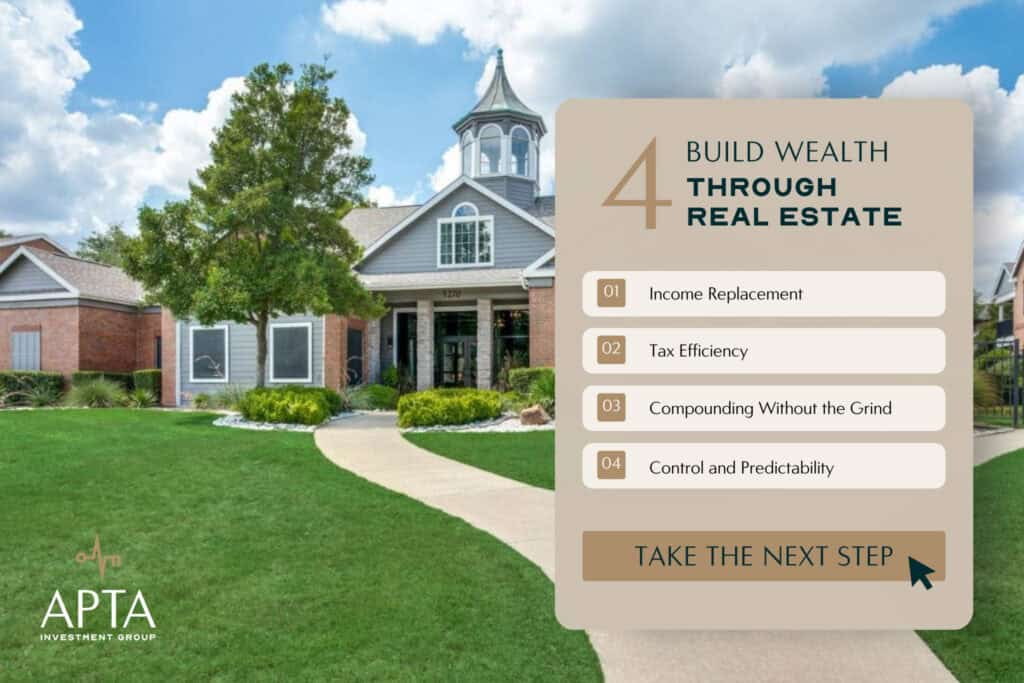
The Role of Passive Real Estate in Physician Retirement Planning
For many physicians, the biggest vulnerability in retirement is relying too heavily on market-based withdrawals. Even well-diversified portfolios can become fragile when income must be pulled during periods of volatility.
This is where passive real estate plays a distinct role in physician retirement planning.
Unlike assets that depend on selling shares to generate income, well-structured real estate produces cash flow. That difference matters most during the withdrawal phase, when stability and predictability take priority over headline returns.
Income Stability When Markets Are Uncooperative
Public markets do not care when you retire. They move on their own schedule. Passive real estate, when underwritten conservatively, can provide income that is less sensitive to daily market swings.
For doctors transitioning out of full-time practice, this stability can act as an income bridge. It reduces pressure to draw from volatile assets during downturns and helps smooth cash flow across market cycles.
This is especially relevant for physician retirement plans built around phased retirement or part-time clinical work.

Tax Efficiency During Withdrawal Years
Taxes are often one of the largest ongoing expenses in retirement for high-income physicians. Real estate offers structural tax advantages that can help manage taxable income during withdrawal years.
Depreciation and other non-cash deductions may offset a portion of real estate income, allowing physicians to maintain cash flow while controlling tax exposure. This can be particularly helpful when coordinating withdrawals from taxable, tax-deferred, and tax-free accounts.
In practice, tax efficiency becomes less about maximizing deductions and more about preserving net spendable income.
Why Real Assets Matter After You Stop Operating
During accumulation years, volatility is tolerable. During retirement, it becomes personal. Real assets introduce diversification at the income level, not just the portfolio level.
For many doctors, passive real estate becomes the foundation of the “stable income” bucket, supporting baseline expenses while other assets remain invested for growth and optionality.
When retirement planning for doctors is designed around income resilience instead of market timing, stress decreases and autonomy increases.
Designing the Best Retirement Plans for Doctors
A strong physician retirement plan is less about finding the perfect account and more about coordinating the ones you already have. Most doctors accumulate assets across multiple silos over decades, employer plans, taxable brokerage accounts, and alternative investments. The challenge comes when withdrawals begin and those silos are not aligned.
Retirement planning for doctors works best when distribution is intentional, tax-aware, and flexible.
Coordinating Accounts Across the Withdrawal Phase
Physicians often hold a mix of:
- Tax-deferred accounts such as 401(k)s and profit-sharing plans
- Taxable investment accounts
- Real assets designed to produce income
The order in which these accounts are drawn from can materially affect taxes, longevity of capital, and stress levels. A thoughtful doctor retirement plan considers not just what to withdraw, but from where and when.
Poor coordination can push physicians into higher tax brackets unnecessarily or force required minimum distributions later that disrupt cash flow.
Withdrawal Order Matters More Than Return Chasing
During accumulation, returns dominate the conversation. During retirement, sequencing dominates outcomes.
Sustainable physician retirement planning focuses on:
- Matching income sources to spending needs
- Preserving growth assets for later years
- Reducing forced distributions during volatile periods
For orthopedic surgeons, oral surgeons, and other specialists with high lifetime earnings, this often means resisting the urge to optimize every account independently. Integration matters more than optimization.
Planning for Healthcare, RMDs, and Legacy
Healthcare expenses and required minimum distributions are two of the most underestimated forces in retirement. Both tend to rise at the same time, later in life, when flexibility is reduced.
The best retirement plans for doctors anticipate these realities early. That includes:
- Structuring income to handle rising healthcare costs
- Managing RMD exposure before it becomes mandatory
- Preserving optionality for legacy and charitable goals
A physician retirement plan that ignores these factors may look strong on paper but feel restrictive in practice.
Vision: Practicing Medicine by Choice, Not Obligation
For many physicians, retirement is framed as an endpoint. A date circled on the calendar. A moment when work stops and life begins. In reality, most doctors don’t want to stop practicing medicine altogether. They want control.
Sustainable physician retirement planning is ultimately about restoring autonomy. It allows you to decide how much you work, what kind of patients you see, and how you spend your time without financial pressure dictating those choices.
When withdrawals are structured thoughtfully, retirement becomes a spectrum. Some physicians reduce call. Others shift to part-time clinical work, teaching, or mentoring. Some step away entirely for a season and return later. The common thread is that the decision is intentional, not forced.
This is where disciplined withdrawal strategy intersects with purpose. Income that is resilient, tax-aware, and diversified gives you the space to reconnect with why you chose medicine in the first place. It also protects against the quiet erosion of burnout that comes from feeling financially trapped late in a career.
A well-designed physician retirement plan does more than sustain a lifestyle. It supports identity, dignity, and contribution. It creates the conditions to practice medicine because you want to, not because you have to.
A Gentle Next Step
If the idea of medical real estate investing resonates with you, consider exploring it at your own pace. Many physicians find that learning a little at a time brings clarity, confidence, and a sense of control they’ve been missing in their financial lives.
You can start by reviewing our educational resources on Alternative Investments and broader physician-focused Insights. When you feel ready to take the next step, our team is here to help you understand opportunities and determine whether they fit your goals.
If these insights have helped you understand how medical office real estate trends shape long-term stability, consider taking the next step in a way that feels intentional and aligned with your goals. You can join our investor network, explore our physician focused resources, or spend time with the insights we publish to help surgeons make informed, confident decisions about their financial future. You do not need to move quickly. You only need to stay curious and committed to learning. When your investments begin to support both your values and your career, you move closer to a life defined by choice rather than obligation.
If you want to learn more or simply see what thoughtful, physician-aligned investing looks like in practice, you’re welcome to Get Started whenever the timing is right for you.
*Apta Investment Group does not provide financial, legal, or tax advice. We recommend consulting with a qualified financial advisor before making any investment decisions.