

Recently, I had a conversation with a few friends who believed the stock market was a safer investment than real estate. Their reasoning was simple: “The stock market delivers an average annual return of around 10%, right?” That’s true but it’s only part of the story. What’s often missing from that conversation is a crucial factor in determining whether real estate is a safe investment: volatility.
To truly understand how safe your investments are, you can’t just look at average returns – you need to consider how unpredictable those returns can be. This is where the concept of standard deviation comes in. Don’t worry, it’s not as complicated as it sounds. By the end of this article, you’ll see why safe real estate investing, when done with discipline and data, can actually bring stability to your overall portfolio and reduce long-term risk.
What is Volatility?
Volatility is one of the most important yet misunderstood factors when evaluating whether real estate is a safe investment. In simple terms, volatility measures how much an investment’s returns fluctuate over time. While the stock market might average around 10% in annual returns, it rarely moves in a straight line. In some years, it can soar by 20%, and in others, it can drop just as sharply – a pattern that creates uncertainty for investors seeking stability.
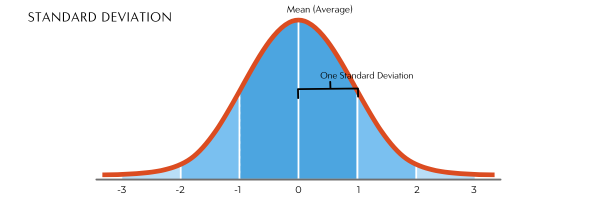
This unpredictability is where the concept of standard deviation becomes valuable. Standard deviation measures how far returns deviate from their average, helping investors understand the likelihood of large swings in performance. A high standard deviation signals greater volatility, while a low one indicates more consistent, predictable returns.
When assessing safe real estate investing, volatility plays a critical role. Historically, private real estate investments have shown lower volatility than the stock market – typically within a 3–5% range versus 15% or more for equities. This means that even during broader market downturns, real estate often maintains a steadier trajectory, offering investors a more stable foundation for long-term growth.
For investors seeking to preserve wealth or complement their stock holdings, understanding and managing volatility is key. Real estate’s lower fluctuations don’t eliminate risk, but they can help smooth returns and bring balance to a diversified portfolio – an essential component of safe real estate investments.
Standard Deviation and Investments
To understand how safe or risky an investment really is, it helps to compare the standard deviation between different asset classes. Standard deviation gives investors a way to visualize just how much returns vary from the average or, in simpler terms, how “bumpy” the ride might be.
Let’s look at two example investments:
- Investment 1: Average Annual Return: 10%, Standard Deviation: 5%
- Investment 2: Average Annual Return: 10%, Standard Deviation: 12%
Both investments deliver the same average return, but Investment 2’s higher standard deviation means its performance fluctuates far more. You might earn 22% one year and lose 2% the next. That kind of volatility can be stressful, especially if you’re relying on consistent returns to fund retirement or long-term financial goals.
This is where safe real estate investing begins to stand out. While equities and mutual funds often experience wide performance swings, real estate investments especially those backed by tangible assets tend to show much narrower variability. Over time, this consistency translates to more predictable outcomes and steadier compounding growth.
It’s also important to consider the emotional side of volatility. Large fluctuations can lead investors to make reactionary decisions selling at a loss or missing key opportunities to reinvest. By contrast, the slower, more stable nature of real estate investment stability can help investors maintain a disciplined, long-term mindset.
While all investments carry risk, focusing on those with historically lower volatility, such as well-managed property assets, can reduce uncertainty and support a more sustainable path toward wealth accumulation.
Why Real Estate is a Stable Investment
When people ask, “Is real estate a safe investment?” the answer lies in its long record of stability and consistent performance. Unlike stocks that react daily to market sentiment, real estate investments especially private real estate investments move steadily, guided by local demand and long-term economic factors.
Many safe real estate investments deliver two forms of return: appreciation and rental income. This steady cash flow helps investors weather market downturns while building long-term wealth. Real estate also shows lower volatility its standard deviation is typically much smaller than that of equities making performance more predictable and less prone to large losses.
Another advantage of real estate investing is protection against inflation. As property values and rental rates rise, investors maintain purchasing power while benefiting from gradual appreciation. Real estate often acts as a stabilizer within a diversified portfolio, offering balance, income, and enduring resilience.

Risk vs. Reward: The Sharpe Ratio
When evaluating investments, it’s important to weigh the risk against the reward. The Sharpe Ratio is a handy tool for this, as it measures how much return you’re getting relative to the risk you’re taking. Without diving too deep into the math, a higher Sharpe Ratio indicates that an investment is giving you better returns for the level of risk.
Real estate, especially private real estate, tends to offer a higher Sharpe Ratio than the stock market. Why? Because the returns are strong, but the risk (volatility) is much lower. So, you’re not only growing your wealth but doing so with less stress and fewer sleepless nights worrying about market swings.
Stability in Real Estate Investments
For investors seeking consistency, real estate offers a valuable sense of stability. While stocks can experience sharp swings due to market sentiment or economic shifts, real estate investments tend to move more gradually. The value of a property is driven by fundamentals – location, demand, and long-term growth – rather than daily market fluctuations.
By adding real estate to a diversified portfolio, investors can reduce overall risk while maintaining steady potential for growth. This approach aligns well with real estate investing, where the goal is to balance performance with predictability. Over time, real estate’s stability and tangible nature make it one of the most dependable ways to preserve and grow wealth.
Real estate is not completely risk-free, but it remains one of the most dependable long-term investments available. With lower volatility, consistent income potential, and tangible value, real estate offers stability that complements more unpredictable assets like stocks. For investors seeking a balanced approach to growth and protection, safe real estate investing provides both security and steady opportunity.
Start your journey toward safer real estate investing with insights from our experienced team.
Understanding Different Real Estate Investment Types
Not all real estate carries the same level of risk. Broadly, investors can choose between residential and commercial real estate, each with its own safety profile.
Residential real estate
Residential real estate including single-family homes and multifamily apartments tends to offer greater stability. These assets are driven by essential housing demand, which stays resilient even during economic downturns.
Commercial real estate
Commercial real estate, such as retail centers, offices, and medical properties, can generate higher returns but may carry more short-term exposure to market cycles or tenant turnover. However, when carefully selected and diversified, commercial assets can enhance overall portfolio performance.
Risk Mitigation Techniques
Investors can make investments even safer through proper due diligence and risk management. Key strategies include:
Diversifying across asset types and geographic markets to reduce local economic exposure.
Focusing on properties with strong occupancy rates and consistent cash flow.
Partnering with experienced operators who emphasize conservative underwriting and long-term planning.
Diversification and Portfolio Considerations
Incorporating real estate into a broader investment strategy can lower overall portfolio volatility. Because real estate performance often moves independently of stocks and bonds, it acts as a stabilizer providing balance and steady returns even in uncertain markets.
How Apta Investment Group Can Help
At Apta, we specialize in guiding you through the process of diversifying beyond the stock market by integrating multifamily properties, retail spaces, and medical offices into your portfolio.
This strategy offers a path to both stability and growth through real estate, helping to balance the swings of stock market investments while aiming to achieve your long-term financial goals.
With a 100% profitability record on over $1 billion in transactions, Apta and our partners have structured investments that align with your needs, allowing you to focus on what matters most whether that’s your career, family, or personal passions.
Let’s explore how a balanced investment strategy, can be the foundation for the financial future you deserve. Schedule an introductory call today or View our current offerings.
Sources:
- “S&P 500 Average Return and Historical Performance,” Investopedia, 2024.
- “Standard Deviation Formula and Uses vs. Variance,” Investopedia, 2024
- “Average Stock Market Return,” Forbes, 2023.
- “The Power of the Sharpe Ratio in Real Estate,” Investopedia, 2022.


By Dr Vasu Kakarlapudi
Vasu Kakarlapudi, MD, MBA, is the founder of Apta Investment Group. An ENT surgeon with 20+ years of experience, he helps fellow physicians replace active income with passive real estate returns, allowing them to reignite their passion for medicine and live freely.